Your Path to Sound: An Auditory Brainstem Implant for NF2
Designed for people with neurofibromatosis type 2, an auditory brainstem implant (ABI) can help you access sound to support your communication, safety, and everyday life.

Hearing Loss With Neurofibromatosis Type 2
Life with NF2 isn’t simple. Living with tumors, ongoing treatments, and uncertainty can bring many challenges—especially when hearing loss occurs after surgery or as the condition progresses. It’s tough to suddenly lose the sounds that once helped you feel safe, connected, and independent.
Perhaps you:
- Rely heavily on lip-reading or written notes, which can feel exhausting
- Worry about missing alarms, traffic, or important spoken warnings
- Feel disconnected from social life or work
- Wonder if restoring any sense of hearing is still possible
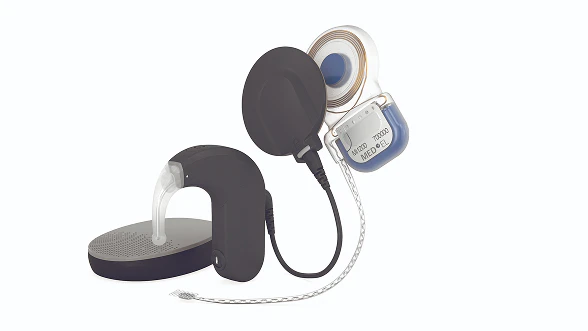
You might have been told that hearing aids or cochlear implants won’t work for you. But there is still hope for your hearing. Auditory brainstem implants are designed specifically for people who have lost their hearing because of NF2. They work by sending sound signals directly to the brainstem.
How a MED-EL ABI Can Help You
Rediscover Everyday Sounds
Notice important environmental cues, such as alarms, doorbells, traffic, and nearby voices.
Support Conversations
Combine sound awareness with lip‑reading for more natural interactions and reduced communication effort.
Enhance Independence and Safety
Feel more secure at home, at work, and in public spaces.
Stay on Track With MRI Monitoring
With an MED‑EL ABI, you can benefit from ongoing MRI scans* to support your tumor care and overall health needs.
Support at Every Step
From candidacy evaluation to activation and follow‑up, MED-EL’s dedicated team of hearing and surgical experts is here for you.

Speak to a MED-EL expert to find out if you could benefit from an ABI.

"Receiving an ABI has been like a flame in the darkness. I spent 17 weeks in complete silence and then this device came to life and gave me access to sound once more. I am able to teach again. I can cross the street and hear an oncoming car. I can even detect when someone has an accent. It’s given me back a world I thought I had lost forever."
Hannah,
ABI Recipient, Australia
Your ABI Journey: From Assessment, to Surgery, and Beyond
Talk to an Expert
Reach out to one of your hearing experts to find out if an ABI could be an option for you. This step helps our team understand your situation. If they think you could qualify for an ABI, they’ll put you in touch with a clinical team near you.
Clinical Evaluation
You’ll attend a series of appointments that may include hearing tests, imaging, and discussions with audiologists and surgeons. The goal is to confirm whether an ABI is suitable for you and to ensure you fully understand the potential benefits and limitations.
Surgery
If you’re a candidate and choose to move forward, the implant surgery will be scheduled. Your team will explain the procedure, recovery expectations, and any preparations needed. After surgery, you’ll have time to heal before your device is activated.
Activation
Once you’ve recovered, your audiologist will switch on your ABI for the first time. Sounds may feel unfamiliar at first—this is normal. You’ll work together to adjust the settings and begin learning how to interpret the new signals.
Ongoing Support
After activation, regular follow‑ups, programming sessions, and rehabilitation can help you build listening skills over time. Progress varies from person to person, and your care team will support you as you adjust and grow more confident with your ABI.

Frequently Asked Questions
An ABI can help people 12 months and older who cannot benefit from a cochlear implant due to non-functional auditory nerves. This includes people with neurofibromatosis type 2 (NF2). A clinical evaluation can confirm your eligibility. Reach out to our team to find out more.
Both ABIs and cochlear implants use an external audio processor to detect sounds and send coded signals to the implant. However, an ABI stimulates the brainstem rather than the cochlea.
If you have NF2, it’s important to know that the way an auditory brainstem implant (ABI) helps with hearing can be different for everyone. Some people may be able to understand speech better when they also use lip reading, while others might even be able to talk on the phone. Results will vary from person to person.
Receiving an auditory brainstem implant (ABI) requires a special type of surgery. Your healthcare team will be there to carefully guide you through the process, answer any questions you have about possible risks, and explain what you can expect during your recovery.
The cost of an auditory brainstem implant varies depending on the country you live in. In many cases, it is covered by health insurance. Our experts can help you navigate approvals and financing plans. To find out more, get in touch with one of our hearing experts by filling in this form.
Yes! MED-EL’s ABI system is designed so you can safely undergo MRIs.* That means you can still benefit from MRI monitoring as part of your NF2 care.

Designed by Hearing Experts
MED-EL is the world’s leading hearing implant company, offering solutions for every type of hearing loss. Our expertise started with our founder, Ingeborg Hochmair, who developed the world’s first microelectronic multichannel cochlear implant in 1977.
Since then, we’ve built on that groundbreaking technology to bring hearing to hundreds of thousands of people around the world. Our dedication to innovation and helping people with hearing loss led us to develop a solution especially for people with NF2.
We’re Here for You on Your Hearing Journey
Would you like to find out more about how MED-EL’s hearing solutions could help you or someone you care for? Simply fill out the contact form, and your local MED-EL office or partner will provide you with more information.
* MED-EL auditory brainstem implants are MR conditional. Recipients with a MED-EL auditory brainstem implant may be safely MRI scanned following the conditions detailed in the instructions for use.

About Cochlear Implants
Find a Cochlear Implant Clinic Near You
Pros and Cons of Cochlear Implants
Cochlear Implant Surgery
How Do Cochlear
Implants Work?
What Does a Cochlear
Implant Sound Like?
Cochlear
Implants and MRI
Can I Enjoy Music With a Cochlear Implant?
Children's Cochlear Implants
Cochlear Implants for Single-Sided Deafness
Product Reliability
Data


