Cochlear Implant Surgery: Precision Surgery With MED-EL
Cochlear implantation is a routine surgery. What exactly happens during cochlear implant surgery? How long does cochlear implant surgery take? And how does modern technology make it more precise than ever before?

The Most Important Points:
- Routine surgery: A cochlear implant surgery is a standard procedure, is minimally invasive, and takes one to two hours.
- Unique surgical planning: OTOPLAN can be used to display and measure any cochlea, which makes choosing the ideal electrode array easier.
- Robot-assisted surgery: Precision tools like OTODRIVE and OTOARM support gentle and efficient insertion helping to preserve the delicate structures of the inner ear.
- Rapid recovery: A few days or weeks after surgery, your cochlear implant will be activated, this will be the first time you hear through your implant.
- Anatomy-based fitting: Only MED-EL offers exact fine-tuning of electrical stimulation based on your individual cochlear anatomy helping to provide the closest to natural hearing.
What Happens During Cochlear Implant Surgery?
Cochlear implant surgery is a procedure during which a hearing implant is placed under the skin behind the ear. Surgery is usually performed under general anaesthesia, is minimally invasive, and takes one to two hours. Depending on your clinic and how the surgery goes, you might go home the same day or spend the night at the hospital.
The cochlear implant you receive matters. Only MED-EL offers individualised cochlear implants designed to fit your unique cochlear anatomy. From surgical planning to electrode array selection to our revolutionary anatomy-based fitting, we offer the latest technology so you can achieve your best hearing.
Read on to find out what happens before, during, and after cochlear implant surgery. We’ll explain each step of the procedure so you know what to expect if you select a MED-EL cochlear implant.
1
Pre-Op Examination
Hearing tests and imaging procedures show whether a cochlear implant is an appropriate solution for your hearing loss.
2
Individualised Surgical Planning
OTOPLAN software can be used to measure your cochlea exactly to help select the right electrode array for you.
3
The Latest in Precision Surgery
The implant with an electrode array that covers your entire cochlea will be implanted under general anaesthesia.
4
Anatomy-Based Fitting
Only MED-EL offers anatomy-based fitting to individually fine-tune your implant.
5
Learning to Hear Takes Practice
Targeted listening practice with professional guidance can help you get the most out of your cochlear implant.
6
Improvement in Quality of Life
With a cochlear implant, many people rediscover life—with more sound, independence, and self-confidence.
Evaluation and Diagnosis
The first step is a hearing loss diagnosis. Whether congenital or age-related, progressive or sudden, if you have hearing loss and a conventional hearing aid is no longer enough, a cochlear implant may be the solution for you.
A thorough preliminary examination, hearing tests, and imaging procedures will indicate whether an implant is appropriate for you. The decision whether or not to get an implant system is, of course, your own. During the decision-making process, it’s important to give yourself enough time to weigh the pros and cons of a cochlear implant and how they affect you. Seek professional advice, involve people you are close to, and take advantage of the opportunity to connect with other hearing implant users who can relate best to your situation.

Want to find out more about getting a cochlear implant?
Precise Planning With OTOPLAN
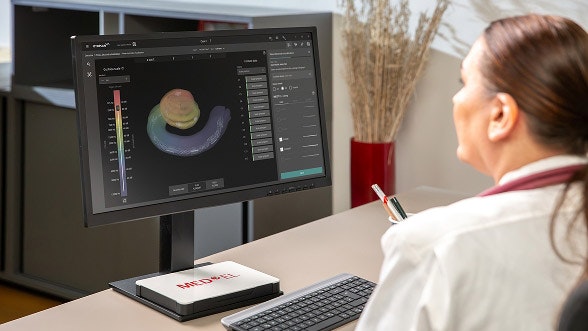
If you’ve decided to get a cochlear implant, the next step is surgical planning. MED-EL offers a unique digital planning tool that makes it possible to plan the procedure to best match your individual anatomy. Innovative OTOPLAN software can be used to measure your cochlea exactly.
Based on CT scans or X-rays, OTOPLAN creates a detailed 3D image of your cochlea and is even able to visualise the exact location of various cochlear implant electrode arrays preoperatively. This makes it easier to select the optimal electrode array for you, which plays a considerable role in you getting the most out of your cochlear implant.
The electrode array is the long, thin part of the implant that is inserted into your cochlea and stimulates it electrically. To achieve closest to natural hearing, the implant needs to stimulate each pitch at exactly the right place in the cochlea. This only works if the electrode array is long enough to cover the entire cochlea.

Want to find out more about getting a cochlear implant?
Gentle Insertion and Stimulation of the Entire Cochlea
Surgery starts with a skin incision and placement of the implant in the bone behind the ear. Then a tiny hole is drilled to create an entrance to the inner ear and the cochlea. This drilling can be done manually or with robotic assistance. This is also the case for insertion of the electrode array into the cochlea.
MED-EL offers unique tools for precision surgery, such as OTODRIVE and OTOARM. These help the surgeon insert the electrode array very slowly and gently into the cochlea.
We also have the widest selection of electrode arrays of any cochlear implant manufacturer, so you can have the array that fits best and covers your entire cochlea, providing closest to natural hearing for the entire frequency spectrum.
After the implant and electrode array are in place, there is a test that can be done to ensure the implant is working correctly and stimulating the hearing nerve. After that, the wound is closed and you’ll be taken to the recovery room where you’ll wake up from the anesthesia.

It’s a tiny, tiny little wound. By the third or fourth day, I was going for a short walk with the dog. Within a week I was showering and washing my hair.
Vera
MED-EL Cochlear Implant User

Activation and Anatomy-Based Fitting
The timing of your activation and your first fitting will depend on your clinic and medical team. This typically takes place anytime from the day after surgery to several weeks afterward. The moment of activation can be emotional. After all, a cochlear implant makes it possible to hear sounds, some of which you may not have heard for a long time, or ever.
The fine-tuning of listening settings and individual frequencies of MED-EL cochlear implants is done using our unique anatomy-based fitting. The electrical stimulation is adjusted to match to the exact location of each individual electrode contact in your cochlea. This is crucial for hearing quality since every cochlea is as unique as a fingerprint. You will only be able to hear sounds, music, and speech as they are meant to sound—closest to natural—if pitches are stimulated and processed at the right place in the cochlea.

Improve Your Hearing Experience With Rehabilitation
A cochlear implant isn’t like a switch that instantly restores hearing. Hearing again is a big change that your brain has to adjust to. You’ll need regular practice to get the most out of your hearing with a cochlear implant. Listening training can take place at rehab sessions as well as independently at home. For this step of your hearing journey, MED-EL offers professional counselling, tips and tricks, and materials and everyday exercises (with or without music).

Robot-Assisted Surgery for More Precision
The top priority of robot-assisted surgery is achieving the best results by performing surgery as gently and safely as possible. Robot-assisted surgery has been around for many years—mechanical assistants are used in orthopedics, urology, and gynecology.
Robot-assisted surgery is a relatively new approach in cochlear implantation. MED-EL shows its pioneering spirit—with HEARO, OTODRIVE, and OTOARM, we offer innovative robot-assisted precision tools for cochlear implantation.
OTODRIVE and OTOARM
This precision may make surgery gentler on the delicate structures in the inner ear. The result? You may be able to keep your remaining hearing, and you’ll be more likely to benefit from future innovations in hearing technology. It’s also linked to better hearing outcomes.[ft][ft][ft]
- Residual hearing preservation
- Access to future technology
- Better hearing results
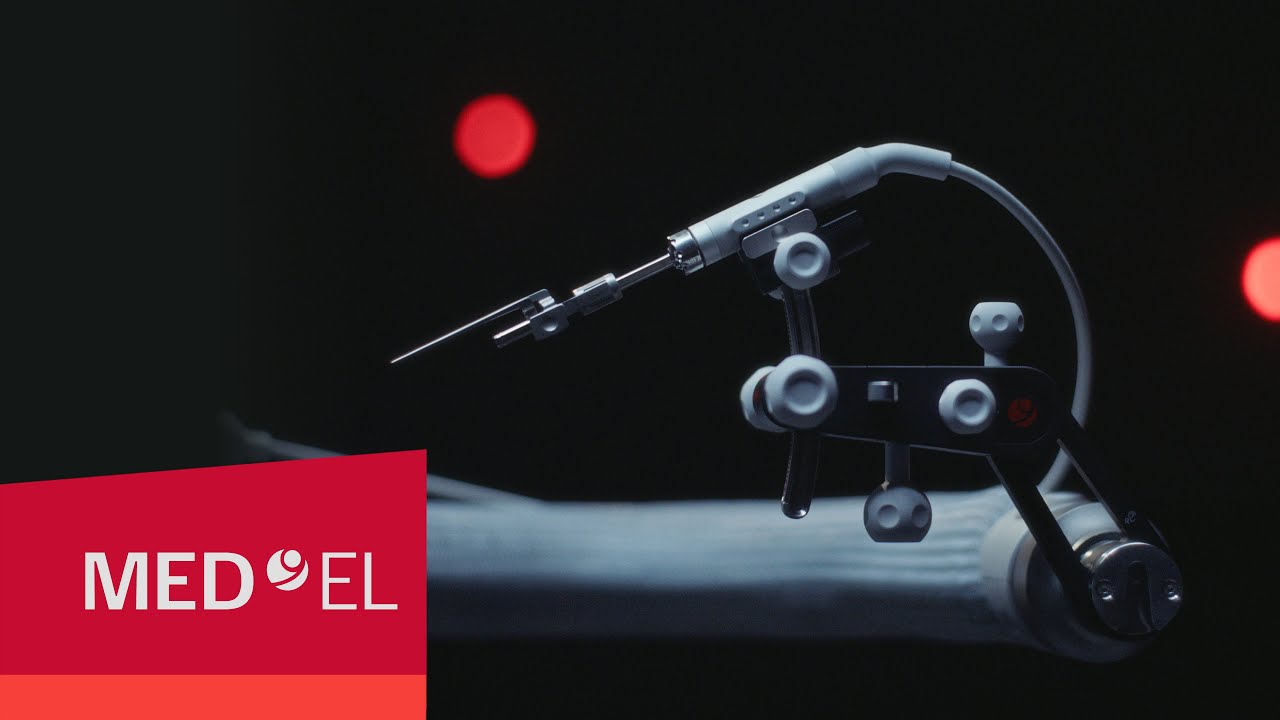
OTODRIVE can be used to maintain very slow and steady movement. It can be used to gently insert the electrode array at a speed of 0.1 to 1.0 mm per second.
The OTOARM surgical positioning tool is affixed securely to the operating table rail and is used to position surgical instruments exactly to reduce natural hand tremor.

Want to find out more about getting a cochlear implant?
Recovery After Cochlear Implant Surgery
The time it takes for the wound to heal after surgery varies from person to person. You can usually expect about two to four weeks. To avoid complications, especially at the beginning of the recovery process, you should keep the wound dry and avoid strenuous activities. Go to check-ups, follow the advice of your team of doctors, and don’t be afraid to ask questions if anything is unclear.
Yes, cochlear implant surgery leaves a small scar behind the ear. This is caused by the incision performed at the beginning of the surgery. Since the scar is in a discreet location and fades with time, it’s usually not very visible.
Directly after surgery—like after any surgery—there will be pain that is usually manageable with pain relievers and rest. Some people experience side effects such as dizziness for a few days or a feeling of pressure or crackling in their ear.
After cochlear implant surgery, your doctor will typically advise you to take a week or two off work or school to recover.
The decision about when to activate your cochlear implant is made by your team of doctors. Activation typically happens between one day and four weeks after cochlear implant surgery. At your activation appointment at the clinic, your audio processor will be switched on and fitted by a professional. Then you will be able to hear sounds with your cochlear implant for the first time.
We’re Here for You on Your Hearing Journey
Would you like to find out more about how MED-EL’s hearing solutions could help you or someone you care for? Simply fill out the contact form, and your local MED-EL office or partner will provide you with more information
Read More

.jpg?auto=format&sfvrsn=327ddc41_3 "CI costs")

HEARO and OTOPLAN are products of CASCINATION AG. OTODRIVE was developed by CASCINATION AG in close collaboration with MED-EL. CASCINATION AG is the legal manufacturer of OTODRIVE. MED-EL is the exclusive distributor of OTODRIVE. For compatible devices, refer to the relevant instructions for use. All devices are sold separately.


