Cochlear Implant: Costs and Insurance
How much does a cochlear implant cost? Will my health insurance cover the costs of the implant and the surgery? What if I need a second cochlear implant? Are rehabilitation costs covered? And what do I need to do to get a cochlear implant? Here you’ll find answers about costs, insurance coverage, and more.

Essential Info:
- NHS cost coverage: The NHS covers the cost of a cochlear implant for qualifying adults and children.
- Untreated hearing loss is expensive: Not treating severe hearing loss costs much more than providing someone with a cochlear implant.
- Other costs: Long term rehabiliation and upgrades are also covered by the NHS.
- Who can get a cochlear implant: Cochlear implants can be a solution for people with hearing loss when a hearing aid is no longer enough.
How Much Does a Cochlear Implant Cost?
A cochlear implant, including surgery and rehabilitation, cost around £20,000 to £30,000 per ear. The NHS typically covers the costs when hearing aids no longer help.
A cochlear implant is the only medical device that can restore a physical sense and is typically used for many years.
There are several key reasons why the NHS covers the cost of cochlear implants. But one of the biggest factors is that the cost of untreated hearing loss is much higher than the cost of a cochlear implant. The estimated yearly cost of untreated hearing loss is around £8,500 per person.

Interested in learning more about individualised cochlear implants?
Cochlear Implant Costs: What Does the NHS Cover?
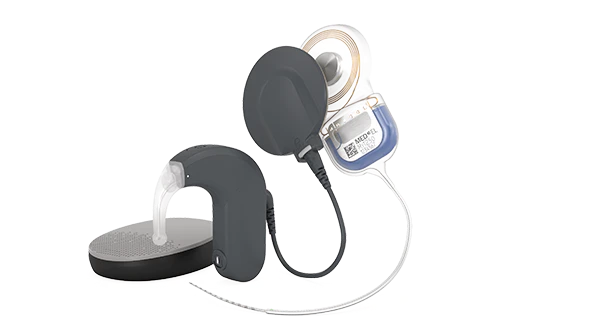
All costs associated with getting a cochlear implant—preliminary examinations, surgery, the implant system (cochlear implant and audio processor), fittings, follow-up care, and hearing rehabilitation—are completely covered by the NHS in the UK. If you have private health insurance, please get in touch with your insurance provider to find out more about cost coverage.
If your child needs cochlear implants for both ears, this is usually free on the NHS. The NHS covers one cochlear implant for adults.
The NHS will also typically cover an upgrade to a newer audio processor model every five years. This will help you access the latest cochlear implant technology. If you have additional questions, please contact your audiologist or your local MED-EL representative.

Interested in learning more about individualised cochlear implants?
Getting a Cochlear Implant
Who qualifies for a cochlear implant? Only people who really need a cochlear implant get one. In other words, the main requirement for a cochlear implant is that even the strongest hearing aid is not effective enough.
If an examination by an ENT doctor shows that you have severe-to-profound sensorineural hearing loss and a cochlear implant could be the right solution, the decision is up to you—seek professional advice, find out about the experiences of people with hearing implants, and involve your closest friends and relatives in the decision process. One thing is certain right from the beginning: You don’t have to worry about the cost!
Achieve Your Best Hearing
Find out how customised cochlear implants can help you hear your best. Request your brochure now, free of charge and with no obligation.
Read More




About Cochlear Implants
Find a Cochlear Implant Clinic Near You
Pros and Cons of Cochlear Implants
Cochlear Implant Surgery
How do Cochlear
Implants Work?
What Does a Cochlear Implant Sound Like?
Cochlear Implants and MRI Safety
Can You Hear Music With a Cochlear Implant?
Cochlear Implants for Single-Sided Deafness
Product Reliability Data


